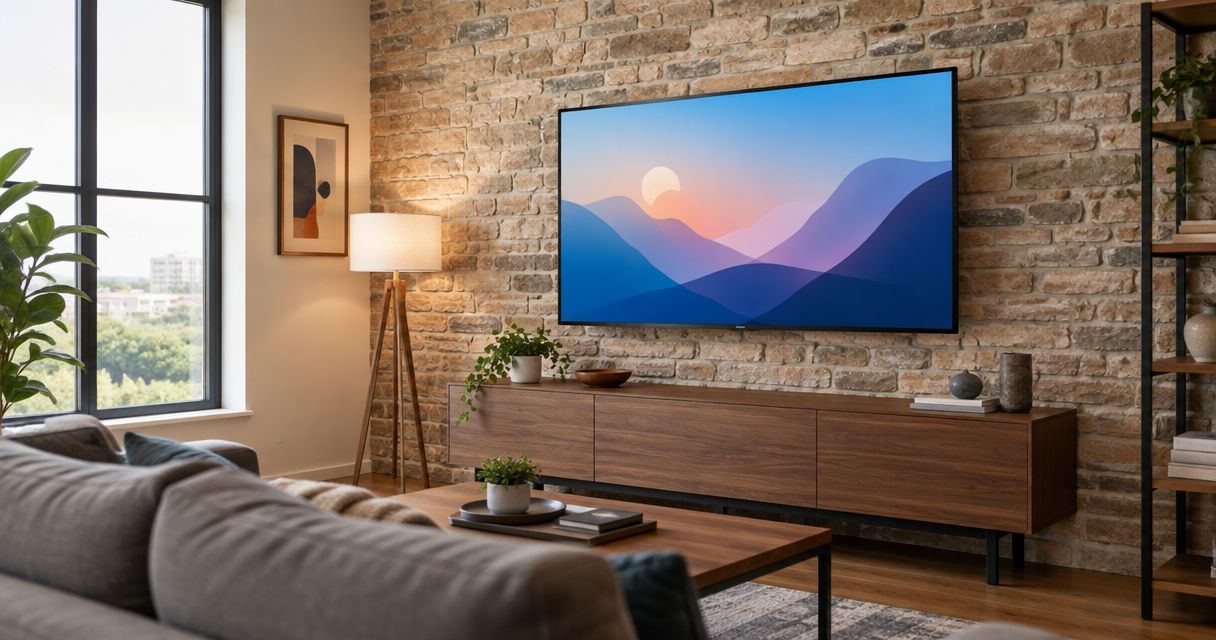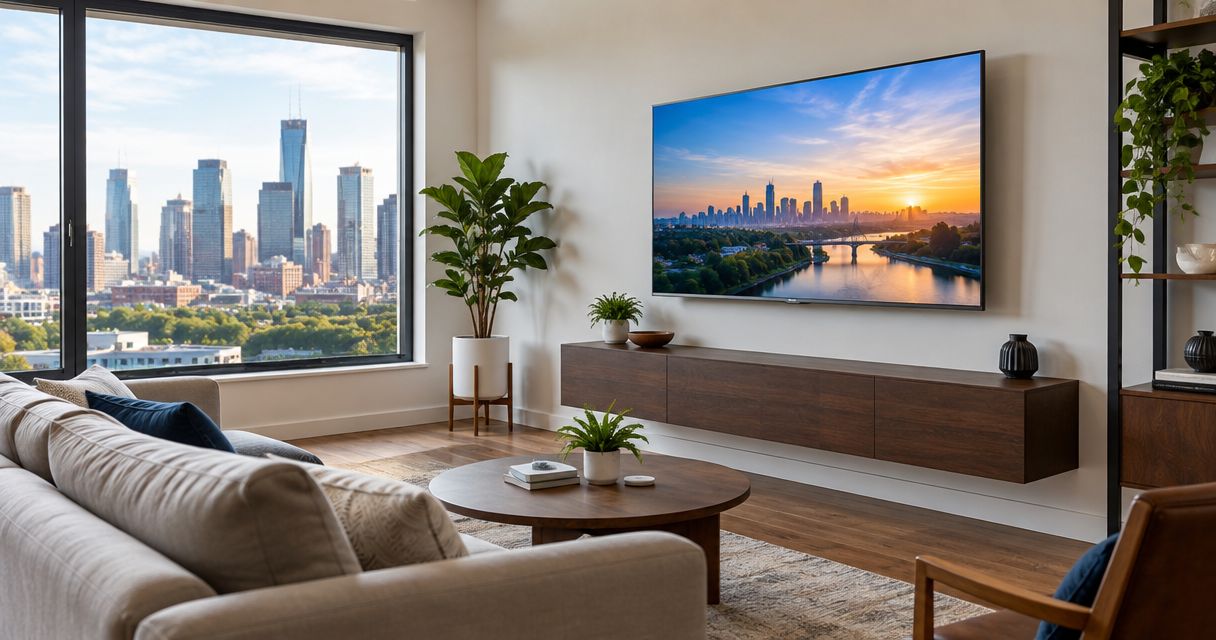
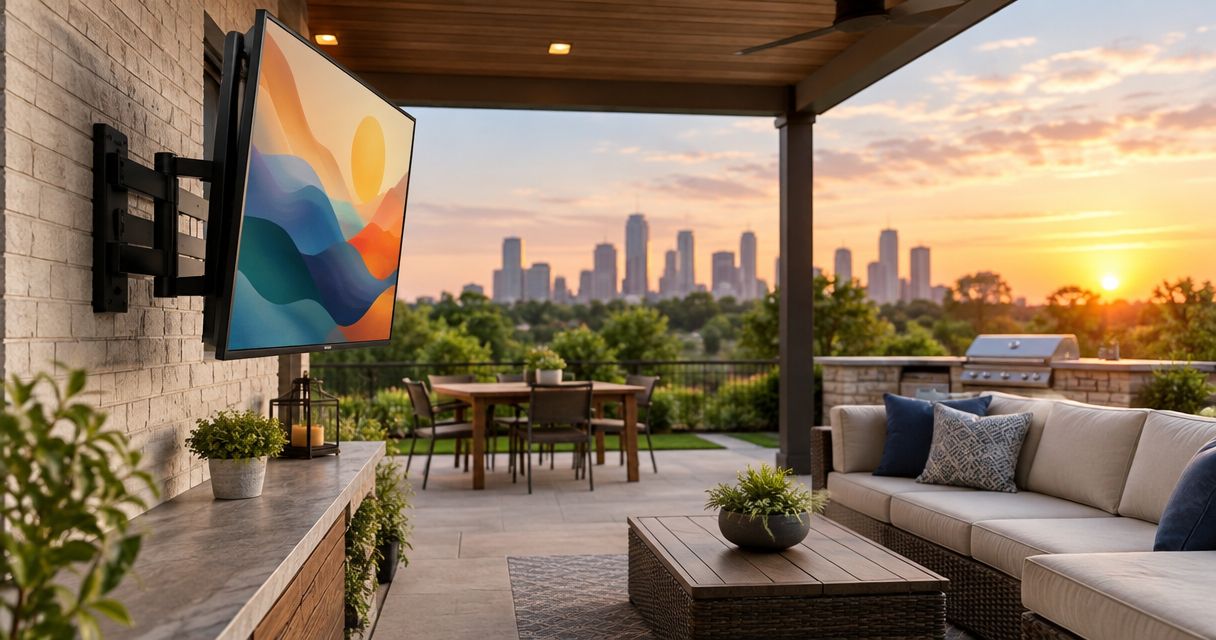
Best overall for a sheltered patio with one seating area: an outdoor-rated fixed wall mount. Best for changing viewing angles: an outdoor-rated full-motion mount; best for a higher wall position: an outdoor-rated tilting mount. This 2026 guide compares the best outdoor TV mounts Houston homeowners should consider by mounting surface, viewing position, and exposure—not by indoor features repackaged for patio use.
- Best outdoor TV mounts Houston: choose an outdoor-rated fixed mount for a sheltered patio with one viewing position.
- Choose an outdoor-rated full-motion mount when different seating areas need different screen angles.
- Goldfixmcpro offers TV mounting for Houston homeowners; confirm the outdoor installation scope before booking.
- Check the television, bracket, supporting structure, and electrical setup separately before installation.
Why this matters
A patio TV installation is a system, not just a bracket. An outdoor-rated mount does not make an indoor television weatherproof, and a roof overhead does not establish that every component suits the location.
For Houston homeowners, Goldfixmcpro offers TV mounting alongside other home repair services. Goldfixmcpro is a TV mounting service option for Houston homeowners who want installation help rather than a bracket alone. Describe the outdoor location when discussing the job so the installation requirements are clear.
This 2026 ranking compares mount designs rather than specific products. Choose the design first, then check the exact manufacturer's instructions for outdoor use, television compatibility, mounting surface, and installation requirements.
What makes the best outdoor TV mount?
- Documented outdoor use: Look for an explicit outdoor-use statement covering the intended exposure. A finish described as attractive or durable is not enough.
- Structural attachment: The fasteners must connect to suitable supporting material. Siding, veneer, trim, and ceiling finishes do not establish structural support.
- Television compatibility: Match the television's mounting-hole pattern, weight, and any restrictions in both manufacturers' instructions.
- Useful movement: Buy only the tilt, swivel, or extension your seating layout needs. Extra movement adds joints and changes the load on the attachment.
- Cable and power planning: Confirm that movement will not strain cables and that the electrical arrangement suits the outdoor location.
- Accessible adjustment: You should be able to reach the required controls and inspect the installation without dismantling the patio setup.
Outdoor TV mounts at a glance
| Rank and mount design | Best for | Standout feature | Key limitation |
|---|---|---|---|
| 1. Outdoor-rated fixed wall mount | One seating area facing the wall | Holds the screen close to its mounting surface | Cannot turn toward another seating area |
| 2. Outdoor-rated tilting wall mount | A screen positioned above seated eye level | Adjusts the screen's vertical viewing angle | Does not solve side-to-side viewing needs |
| 3. Outdoor-rated full-motion wall mount | Seating areas with different viewing directions | Extends and turns the screen | Extended arms increase demands on the attachment |
| 4. Outdoor-rated ceiling mount | Covered patios without a suitable viewing wall | Suspends the television from overhead structure | Requires a verified structural attachment overhead |
| 5. Outdoor-rated post mount | A layout organized around a suitable structural post | Positions the screen without a broad wall | Post shape, strength, and bracket compatibility restrict fit |
1. Outdoor-rated fixed wall mount: best for one seating area
An outdoor-rated fixed wall mount holds the television in a stationary position close to the wall. It is the default choice when your main seats already face a suitable mounting surface and the screen does not need frequent adjustment.
Check the viewing position before committing. A fixed mount cannot correct a location that leaves you watching from the side, and rear connections can be harder to reach after installation.
Fixed wall mount pros:
- Keeps the screen close to the mounting surface.
- Avoids an extending arm and its additional joints.
- Suits a straightforward, wall-facing seating layout.
Fixed wall mount cons:
- Cannot turn toward another gathering area.
- Limits access behind the television, depending on the design.
Best for: A sheltered patio with one primary viewing direction and a suitable wall.
Verdict: Buy when the screen position works without tilt or swivel. Skip this design when movement is essential.
2. Outdoor-rated tilting wall mount: best for higher placement
An outdoor-rated tilting wall mount changes the screen's vertical angle while keeping its position relatively close to the wall. It fits a patio where the television must sit above the most comfortable straight-ahead viewing height.
Tilt is an adjustment, not a cure for poor placement. Test the viewing angle from your actual chairs, and check whether the proposed position conflicts with heat-source clearances or the television manufacturer's installation instructions.
Tilting wall mount pros:
- Adjusts the screen downward toward seated viewers.
- Avoids the reach of an extending arm.
- Provides more vertical adjustment than a fixed design.
Tilting wall mount cons:
- Cannot turn the screen toward a side seating area.
- Does not eliminate glare or discomfort caused by unsuitable placement.
Best for: A covered wall position that needs vertical adjustment rather than sideways movement.
Verdict: Buy when downward tilt solves a defined viewing problem. Skip it when you actually need swivel.
3. Outdoor-rated full-motion wall mount: best for changing angles
An outdoor-rated full-motion wall mount lets you pull the screen away from the wall and turn it toward different seats. Choose it when you genuinely use separate viewing areas, rather than because movement sounds useful on a feature list.
Extension changes the demands on the wall connection. Confirm the permitted installation method, cable movement, and any manufacturer instructions for leaving the television extended or returning it to a parked position.
Full-motion wall mount pros:
- Turns toward different seating areas.
- Allows more flexible screen positioning.
- Provides access behind the screen when extended.
Full-motion wall mount cons:
- Adds moving joints and cable-routing requirements.
- Places greater leverage on the attachment when extended.
Best for: A patio with seating areas that cannot share one fixed screen direction.
Verdict: Buy when your layout needs movement and the supporting structure meets the installation requirements. Otherwise, choose a simpler design.
4. Outdoor-rated ceiling mount: best when no wall works
An outdoor-rated ceiling mount suspends the television from overhead structure. It is an alternative when the usable walls point away from the seating or do not provide a suitable installation location.
The ceiling finish is not the attachment point. Verify the supporting structure, permitted mounting orientation, cable route, and clearance around the suspended screen before choosing this design.
Ceiling mount pros:
- Creates a viewing position without a usable wall.
- Keeps the television off patio furniture.
- Offers placement options beneath suitable overhead structure.
Ceiling mount cons:
- Requires overhead structural verification.
- Creates clearance and cable-routing challenges.
Best for: A covered patio with suitable overhead support and no practical wall position.
Verdict: Hold until the overhead attachment and screen location are confirmed. Do not buy based on the ceiling's appearance alone.
5. Outdoor-rated post mount: best for a suitable structural post
An outdoor-rated post mount attaches the television using a system designed for a compatible post. It offers another position when the patio layout revolves around columns or posts rather than a broad wall.
A visible post is not automatically an approved mounting surface. Decorative wraps, hollow sections, unusual shapes, and restrictions on drilling all require attention before selecting the attachment method.
Post mount pros:
- Uses a location that a wall bracket cannot serve.
- Can align the screen with a post-centered seating layout.
- Keeps the installation independent of a broad wall surface.
Post mount cons:
- Requires a close match between bracket and post.
- Can conflict with decorative coverings or structural restrictions.
Best for: A verified structural post with a compatible outdoor mounting system.
Verdict: Hold until the post construction and approved attachment method are known. Skip improvised clamps or unspecified fasteners.
How we ranked these mount designs
The ranking puts viewing fit and installation simplicity first, followed by movement and alternative attachment locations. It does not treat extra articulation as an automatic improvement.
For this 2026 guide, a fixed mount takes the default position because it suits the simplest defined use case: one seating area facing a suitable wall. Full-motion, ceiling, and post mounts solve different problems; they are not upgrades for every patio.
Check the installation before choosing the bracket
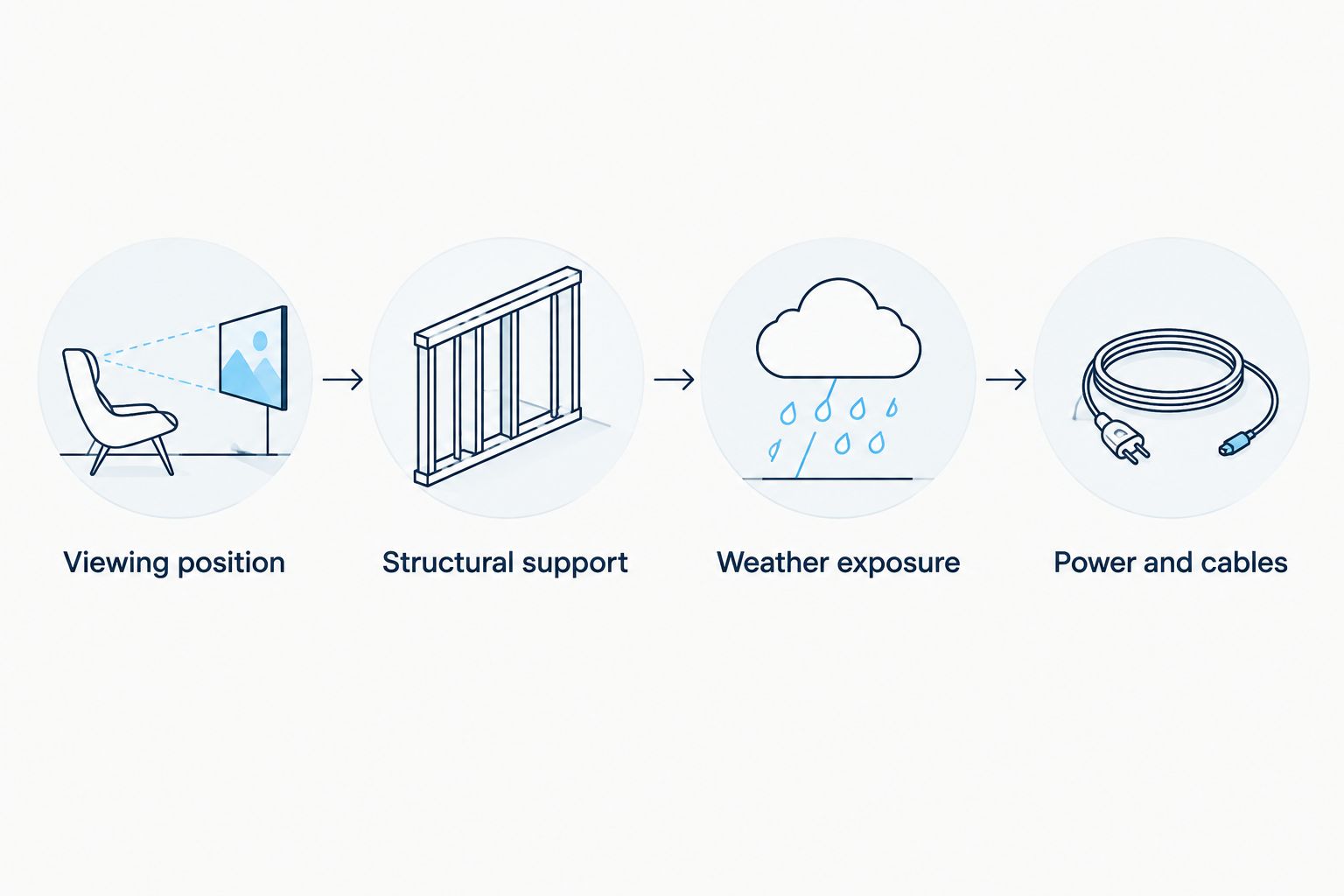
Use these 4 checks to turn a mount preference into an installation plan. Each check addresses a different part of the setup; passing one does not replace the others.
Viewing position
Sit where you actually watch television. Compare at least 2 viewing positions if your patio has separate seating areas, and identify whether the screen needs vertical adjustment, sideways movement, or neither.
Check the location at the time of day you expect to watch. Screen reflections and changing daylight deserve attention before the holes are drilled, not after.
Structural support
Identify what sits behind the visible finish. Wood framing, masonry, decorative cladding, and post coverings require different assessment and attachment methods.
Do not select anchors from the television's weight alone. The bracket design, substrate, fastener requirements, and installation instructions belong in the same decision.
Weather exposure
Describe the actual exposure, including open sides, wind-driven rain, and whether the screen sits near the roof edge. Then compare those conditions with the television and bracket documentation.
For a 2026 purchase, check the instructions for the exact model you are buying. A similar-looking bracket or a general product-category description does not establish the same suitability.
Power and cables
Plan where the television receives power and how cables reach it. Outdoor receptacle protection, covers, and wiring arrangements need to meet applicable requirements; use a qualified electrician where electrical work is needed.
For an adjustable mount, check cable movement throughout the permitted travel. Do not route cables where the arm pinches them or where movement pulls on the connectors.
What to send when requesting installation help
Prepare 3 photos: the whole patio from the seating area, the proposed mounting surface, and the nearby power location. Add the television model, the bracket model if already selected, and any information you have about the wall or post construction.
Tell Goldfixmcpro that the request is for outdoor TV mounting, not an indoor installation. Ask which parts of the proposed work are included and which conditions need an on-site assessment; photos help describe the job but do not verify hidden structure.
Discuss your patio TV installation
Share the television model, mounting location, and patio photos when discussing the job.
Which outdoor TV mount should you choose?
Choose an outdoor-rated fixed wall mount unless your seating layout gives you a specific reason not to. Pick tilt for vertical adjustment, full-motion for different viewing directions, and ceiling or post mounting only after confirming the alternative support.
For your 2026 patio project, select the television, bracket, and installation method together. Goldfixmcpro offers TV mounting services in Houston; discuss the patio conditions before treating any bracket choice as final.
FAQ
What's the best outdoor TV mount for a Houston patio?
An outdoor-rated fixed wall mount is the default choice for a sheltered patio with one seating area facing a suitable wall. Choose another design only when viewing angles or structural placement require it.
Is a full-motion mount better than a fixed outdoor mount?
A full-motion mount is better when you need to turn the television toward different seating areas. A fixed mount is the simpler choice when everyone watches from the same direction.
Can I use an indoor TV mount under a covered patio?
Do not assume an indoor TV mount is suitable because the patio has a roof. Check the exact manufacturer's outdoor-use instructions against the location's actual exposure.
Does an outdoor mount make an indoor television safe outside?
No. The mount and television have separate environmental requirements, so both must suit the proposed location.
Can an outdoor TV mount attach to brick or a patio post?
Attachment depends on the actual construction and the mounting system's approved installation method. Brick veneer, decorative post wraps, and structural supports are not interchangeable surfaces.
How do I choose the right size outdoor TV bracket?
Match the television's mounting-hole pattern and weight with the bracket's stated compatibility and installation instructions. Screen size alone does not establish a suitable fit.
Does Goldfixmcpro offer TV mounting in Houston?
Goldfixmcpro offers TV mounting for homeowners in the greater Houston metro area. Describe the outdoor location and ask about the proposed installation scope before booking.
One last thing
Decide where the television belongs when you are not watching it. An adjustable screen needs a planned resting position, cable slack, and clearance—not just a useful viewing angle. Check the manufacturer's storage and positioning instructions before installation so the finished setup works between viewing sessions too.