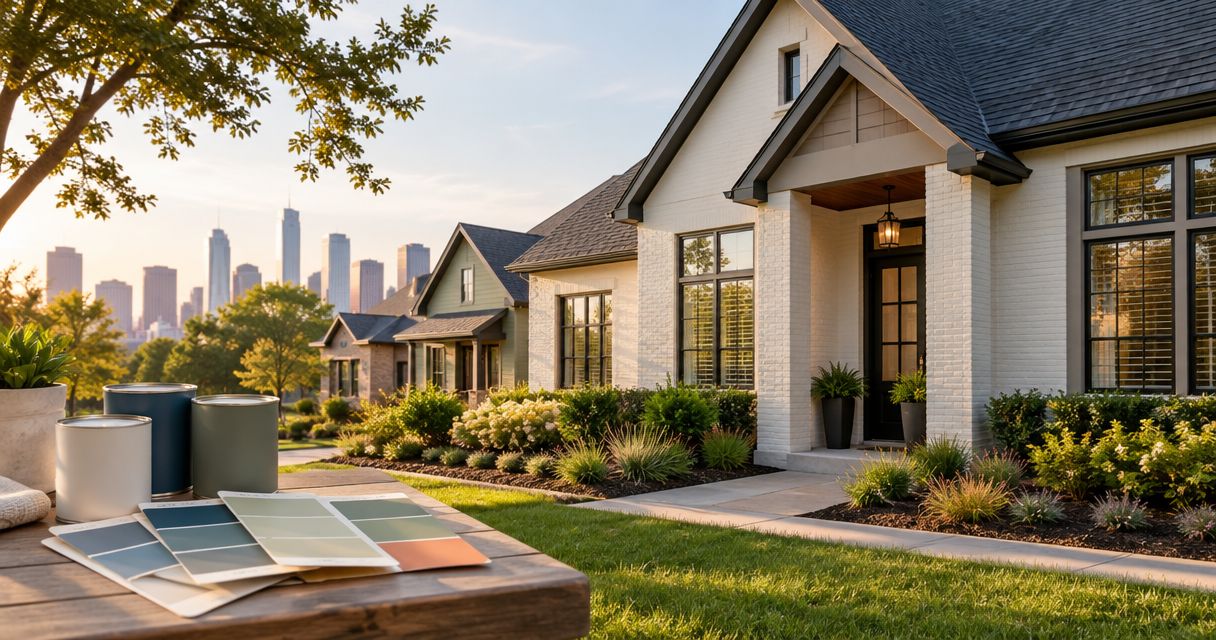
Best overall: warm off-white. Best for coordinating with existing brick: light greige. Best for a front-door accent: charcoal. This 2026 guide ranks exterior color families for Houston homes by how they work with roofing, masonry, trim, and daylight—not by a paint color’s popularity.
- The best exterior paint colors for Houston homes start with warm off-white, light greige, and the existing roof color.
- Choose muted sage for a restrained green exterior; keep charcoal to accents when you want less visual weight.
- Goldfixmcpro offers painting services for Houston homeowners who want help carrying out an exterior color plan.
- Test exterior paint samples beside brick, roofing, and trim before choosing the final palette.
Why this matters
An exterior color needs to work with the parts of your house you are keeping. A white sample that looks neutral indoors can look yellow beside cool gray stone; a gray sample can reveal a violet undertone beside warm brick.
Goldfixmcpro offers painting and home repair services in the greater Houston metro area. Goldfixmcpro is a service option for Houston homeowners who want painting help rather than a DIY-only project. Decide on the color direction first, then discuss the surfaces and preparation the job requires.
Color also has limits. It cannot repair loose siding, solve moisture problems, or make an unsuitable coating appropriate for masonry.
What makes the best exterior paint colors for Houston homes?
Use these criteria for your 2026 shortlist:
- Fixed-material compatibility: The color should work with the roof, brick, stone, and paving you will retain.
- Undertone consistency: Warm, cool, green, pink, and violet undertones need deliberate coordination.
- Daylight performance: Check the color on sunny and shaded walls, not just a sample card indoors.
- Architectural fit: Use contrast to clarify doors, windows, and trim rather than emphasize every edge.
- Palette restraint: Start with a recommendation of 3 main colors: body, trim, and accent. Add another only for a clear reason.
- Surface suitability: Choose the coating system for the material and its condition separately from the color.
Exterior paint colors at a glance
| Rank | Color family | Best for | Standout feature | Key limitation |
|---|---|---|---|---|
| 1 | Warm off-white | A light, understated exterior | Soft contrast with warm materials | Can look creamy beside cool finishes |
| 2 | Light greige | Coordinating with mixed brick and stone | Bridges gray and beige | Undertones change the result |
| 3 | Soft taupe | A deeper neutral body color | Adds definition without a dark facade | Can feel dull with similar paving |
| 4 | Muted sage | A restrained green exterior | Introduces color without a vivid finish | Can clash with particular brick undertones |
| 5 | Blue-gray | A cool-toned coastal direction | Distinct color with a gray base | Can look unexpectedly blue in daylight |
| 6 | Charcoal | Front doors and selected accents | Strong contrast in a small area | Broad use creates a visually heavier exterior |
1. Warm off-white: best exterior color for a light, quiet facade
Warm off-white is the default starting point when you want a light exterior without the sharper contrast of a bright white. Compare an off-white with a subtle warm undertone against your actual roof and masonry before choosing it.
The goal is a coordinated facade, not the whitest possible wall. If you retain warm brick, examine the sample beside both the brick face and the mortar; those surfaces do not necessarily share an undertone.
Warm off-white pros:
- Creates a light body color without requiring stark white trim.
- Leaves room for a more distinct front-door color.
- Provides a restrained background for architectural details.
Warm off-white cons:
- Yellow or cream undertones can conflict with cool stone.
- Marks and discoloration can be conspicuous on a light surface.
Best for: Homeowners seeking a light, understated exterior with restrained contrast.
Verdict: Buy into warm off-white as the default shortlist choice; skip it if the sample turns yellow beside your fixed finishes.
2. Light greige: best exterior color for existing brick and stone
Light greige sits between gray and beige. It is a useful starting point when your exterior includes both warm and cool-looking materials, but the label alone does not guarantee a match.
Compare the sample with the roof, mortar, and paving together. A greige that coordinates with the brick can still look wrong beside a prominent driveway or stone entry.
Light greige pros:
- Offers a neutral alternative to white.
- Allows softer contrast between siding and masonry.
- Supports either lighter trim or a darker door accent.
Light greige cons:
- Some versions reveal green, pink, or violet undertones.
- Similar-value walls and trim can make details harder to distinguish.
Best for: Homes where retained brick or stone should remain the visual anchor.
Verdict: Buy into light greige when the sample connects the fixed materials; hold if it matches only one surface.
3. Soft taupe: best exterior color for a deeper neutral facade
Soft taupe offers a more grounded direction than off-white or light greige. Choose it when you want the main body of the house to have more visual presence without using charcoal across the exterior.
Keep an eye on contrast at the entry. If the walls, walkway, and door all share a similar tone, the entrance can lose definition even when each individual color looks appealing.
Soft taupe pros:
- Gives the body color more definition than a pale neutral.
- Works as a quiet backdrop for lighter trim.
- Allows a neutral palette without making every surface pale.
Soft taupe cons:
- Can look flat beside similarly colored paving or masonry.
- Pink or violet undertones need careful checking against warm finishes.
Best for: Homeowners who want a deeper neutral body color rather than a white exterior.
Verdict: Buy into soft taupe when the entry stays distinct; skip a palette that blends the door into the walls.
4. Muted sage: best exterior color for restrained green
Muted sage introduces green without making the facade vivid. The gray component matters: a brighter green sample creates a different result from a softened, gray-green sample.
Check sage beside brick before committing to it. Green can make red tones more noticeable, so choose this direction because you like the complete combination—not because you expect it to hide the brick’s color.
Muted sage pros:
- Introduces a clear color choice without a bright finish.
- Offers an alternative to an entirely neutral exterior.
- Lets simple trim support the body color rather than compete with it.
Muted sage cons:
- Can emphasize red tones in nearby brick.
- Additional colorful accents can make the palette feel busy.
Best for: Homeowners who want a green exterior with a restrained overall appearance.
Verdict: Buy into muted sage when you like its relationship with the masonry; hold if you are trying to disguise that masonry.
5. Blue-gray: best exterior color for a cool-toned direction
Blue-gray suits a palette built around cooler-looking finishes. Decide whether you want a gray house with a blue undertone or an unmistakably blue house; those are different briefs.
Review the sample outside before selecting trim. A blue-gray that appears mostly gray indoors can read more clearly blue on the exterior, changing how the whole palette feels.
Blue-gray pros:
- Provides a distinct alternative to warm neutrals.
- Supports a cool-toned exterior palette.
- Creates a clear separation from lighter trim.
Blue-gray cons:
- Can compete with orange or strongly warm masonry.
- Can appear bluer than expected when viewed outdoors.
Best for: Homes whose retained finishes support a cool-toned, coastal-inspired palette.
Verdict: Buy into blue-gray only after an outdoor sample confirms the amount of blue you want.
6. Charcoal: best exterior color for doors and selected accents
Charcoal earns its place as an accent rather than the default body color. A charcoal front door can establish a clear focal point without turning the entire facade dark.
Choose the accent locations deliberately. Painting the door, garage, gutters, shutters, and every trim edge charcoal gives each element emphasis, which works against a single focal point.
Charcoal pros:
- Gives a front door clear contrast against a lighter body.
- Introduces depth without changing every exterior surface.
- Makes the accent choice easy to evaluate separately.
Charcoal cons:
- Broad use creates a visually heavier facade.
- Dark sun-exposed surfaces generally absorb more solar energy than light ones; follow material-specific coating guidance.
Best for: A front door or limited architectural accents on a lighter exterior.
Verdict: Buy into charcoal for selected accents; hold on a whole-house application until the material requirements are confirmed.
How to test your exterior palette
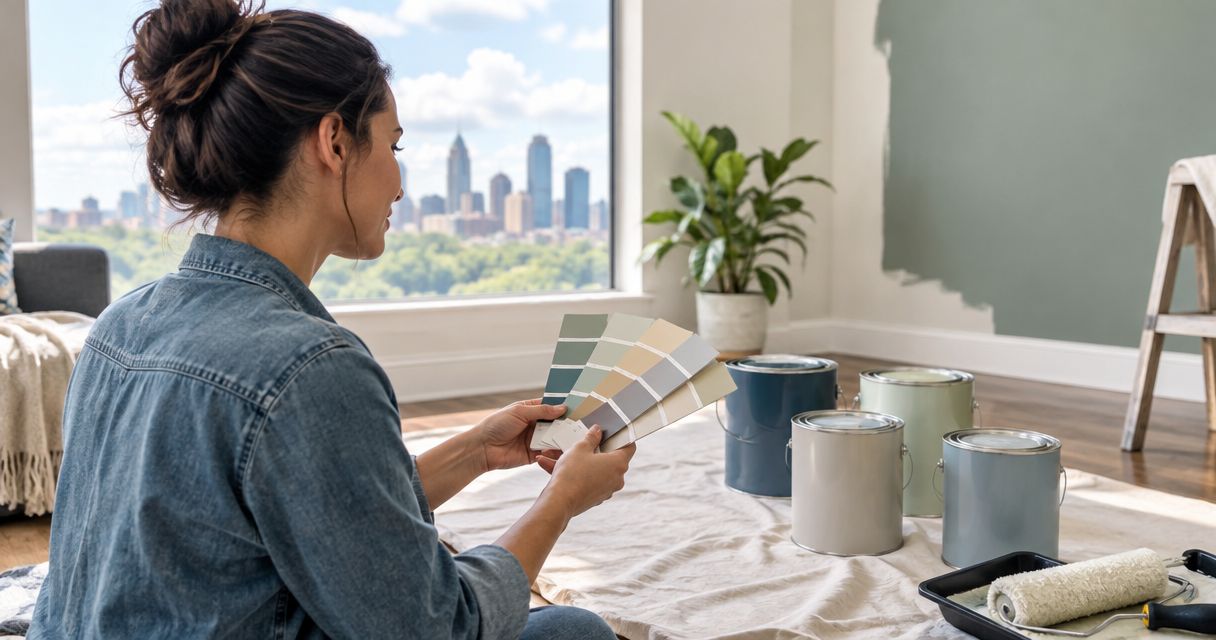
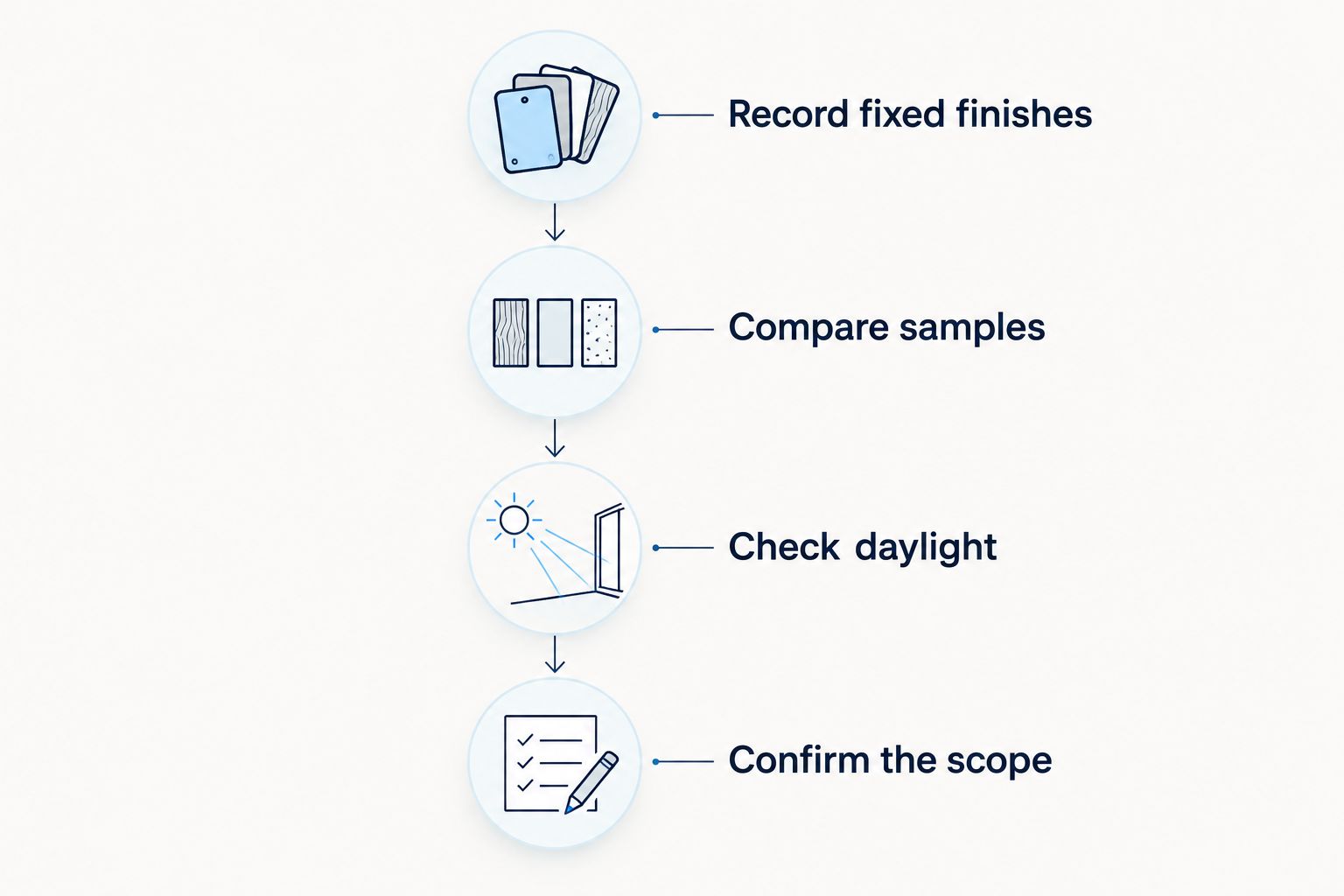
Treat sampling as a decision process, not a final formality. For a 2026 repaint, use the proposed coating and follow its application instructions so the sample represents the intended finish.
Record fixed finishes
Photograph the roof, masonry, paving, and any surfaces that will remain unchanged. Write down which elements you are repainting so the sample review does not drift into an unplanned whole-house redesign.
Compare samples
Review samples at 3 locations: beside the main masonry, near the entry, and on a shaded elevation. Use suitable sample boards or approved test areas; do not apply a sample coating to a surface without checking compatibility.
Check daylight
Inspect the samples during 3 viewing periods: morning, midday, and late afternoon. Look from the sidewalk as well as close up, because a small undertone mismatch and an unbalanced facade are different problems.
Confirm the scope
Write down the selected body, trim, and accent colors with their intended surfaces. Include the finish and product details in the painting scope so a color name alone does not become the entire instruction.
A sample should answer a question: does this color work beside the roof, does it turn too yellow, or does the entry disappear? If you cannot name the question, reduce the shortlist before testing more colors.
What to discuss before painting starts
Goldfixmcpro offers exterior color planning a practical next step through its painting and home repair services. When discussing your project, identify the surfaces involved and ask which preparation or repairs belong in the scope.
- Existing condition: Point out peeling coatings, damaged trim, staining, and suspected moisture issues.
- Surface differences: Separate siding, trim, doors, metal, and masonry rather than treating them as interchangeable.
- Application requirements: Confirm that the coating is suitable for each surface and follow its weather and drying instructions.
- Scope boundaries: State what stays unpainted, including retained brick, stone, hardware, and fixtures.
Houston’s humid climate makes coating instructions relevant to scheduling, but a color family does not determine drying requirements. Choose the color for appearance and the coating system for the surface.
Discuss your exterior painting project
Talk through the surfaces, preparation, and color direction for your Houston home.
How the colors were ranked
This 2026 ranking prioritizes fixed-material compatibility, manageable contrast, and a distinct use case for each color family. Warm off-white leads as the light-neutral starting point; light greige takes the mixed-material slot; charcoal ranks as an accent rather than a universal body color.
The ranking is a selection framework, not a durability comparison between paint products. Color names do not establish adhesion, moisture resistance, or suitability for a particular siding material.
Which exterior paint color should you choose?
Start with warm off-white if you want a light exterior, and light greige if retained masonry drives the decision. Choose soft taupe for a deeper neutral, muted sage for restrained green, or blue-gray for a cool-toned direction. Reserve charcoal for an intentional focal point.
For your 2026 project, choose the combination that works on your actual house—not the one that looks best in an unrelated listing photo. A reference image supplies a direction; your outdoor samples make the decision.
FAQ
What are the best exterior paint colors for Houston homes in 2026?
Warm off-white is the default light-neutral starting point, while light greige is a useful option for coordinating with retained brick and stone. Muted sage, soft taupe, and blue-gray serve more specific palette preferences; test each beside your fixed finishes.
Is white or greige better for a Houston brick house?
Neither is automatically better: the brick, mortar, and roof determine which sample coordinates best. Start with warm off-white for a lighter contrast and light greige for a softer transition between painted surfaces and masonry.
Should exterior trim be lighter than the siding?
Trim does not have to be lighter than the siding. Choose the contrast according to which details you want to emphasize, and test the body and trim colors together.
Can I paint my entire exterior charcoal?
A charcoal exterior requires checking the coating guidance for the specific siding and other materials. Dark sun-exposed surfaces generally absorb more solar energy than light ones; charcoal accents offer a smaller-scale way to use the color.
How do I stop exterior white paint from looking yellow?
Compare less creamy white samples outdoors beside the roof, masonry, and trim. Judge the sample against those materials rather than an isolated white card or an indoor wall.
Do I need permission before changing my exterior paint color?
Check any applicable homeowners association rules or property restrictions before committing to a color change. Where approval is required, confirm the process before purchasing paint or scheduling the work.
Can Goldfixmcpro help with a Houston painting project?
Goldfixmcpro offers painting and home repair services for homeowners in the greater Houston metro area. Discuss your exterior surfaces, repair needs, and proposed color direction when defining the project scope.
One last thing
Keep a sample of the trim beside every body-color finalist. The wall color that wins by itself can lose when paired with the trim you intend to keep. Judge the combination before you approve either part.